










Why Are Kids Sunglasses Important? A Parent Guide
A bright afternoon at the park can mean squinting, sandy fingers and sunglasses being dropped before the picnic blanket is even out. But why are children’s sunglasses important beyond making little ones look brilliantly cool? Because children’s eyes need protection from ultraviolet (UV) rays every bit as much as their skin - and often more attention than they get.
Young children spend plenty of time outside, whether they are racing scooters down the pavement, building sandcastles, watching football or heading off on a family ski trip. Quality sunglasses with 100% UV protection give their developing eyes a practical layer of defence, while a comfortable, durable frame means they are far more likely to keep them on.
Why are children's sunglasses important for eye health?
Sunlight contains UVA and UVB rays. You cannot see UV rays, and you cannot judge their strength simply by how warm or bright the day feels. They are present on cloudy days, during the school run and in the colder months too.
Children’s eyes are still developing. Their pupils are generally larger than adults’, and the natural lens inside the eye lets more UV light through. That can mean more exposure reaches the sensitive structures at the back of the eye. Eye damage linked to UV exposure builds over time, so everyday protection is not about causing alarm over one sunny afternoon. It is about creating a smart sun-safety habit early.
A wide-brimmed hat and shade are brilliant starting points, especially for babies. Sunglasses add protection when shade is moving, when the buggy canopy does not cover every angle, or when your child is busy charging towards the climbing frame. Think of them as part of the same kit as sun cream, a hat and a water bottle.
Dark lenses are not the same as UV protection
This is the detail that matters most when choosing children’s sunglasses: dark lenses do not automatically block harmful UV rays. In fact, a dark lens without proper UV filtering may make things worse, because it causes the pupil to open wider while UV light can still pass through.
Look for clear wording that confirms 100% UVA and UVB protection, or UV400 protection. UV400 means the lenses block light wavelengths up to 400 nanometres, covering both UVA and UVB rays. This is the non-negotiable feature, whatever frame style or lens colour your child prefers.
Polarised lenses are useful too, but they do a different job. They reduce reflected glare from flat surfaces such as water, snow, wet roads and pale sand. That can make days at the beach, by the lake or on the slopes more comfortable for little eyes. Polarisation is a great extra for high-glare adventures, but it should always sit alongside full UV protection, not replace it.
Children need sunglasses beyond the summer holiday
British weather can be sneaky. A cool spring morning may feel harmless, yet low sun can shine directly into a child’s eyes on a walk or in the pushchair. In winter, sunlight reflects strongly from snow and can be uncomfortable on bright, frosty days. At the seaside, water and sand bounce light upwards, so even children playing under a parasol can encounter glare.
Sunglasses are particularly useful for outdoor nursery play, family holidays, long car journeys, bike rides and days near water. You do not need to turn every five-minute dash to the shops into a battle over accessories. The goal is a simple routine: if your child will be outside in bright conditions for a while, take their sunglasses with you.
For babies, use your judgement. Shade, a pram sun canopy and a brimmed hat are usually the first line of defence, and sunglasses can be helpful when they are in direct bright light. Never rely on any cover that restricts airflow around a pram. Fresh air, shade and sensible positioning still matter.
The best sunglasses are the ones children will actually wear
A pair that pinches behind the ears, slides down a small nose or feels too heavy will quickly end up at the bottom of the changing bag. Fit is not just about comfort - it helps keep lenses in the right position to shield the eyes.
Choose a size designed for your child’s age and face, rather than assuming one frame will suit everyone. A 0-2 size gives babies and toddlers a more secure starting point; 3-5 and 6+ options make it easier to find a fit that grows with their adventures. Check that the frame sits comfortably across the bridge of the nose, does not press into the temples and stays put during an enthusiastic head shake.
Style can be a powerful parenting tool here. Some children will happily wear a classic pair of aviators, while others are far more persuaded by colourful flowers, hearts or rounded frames. Letting them choose between two parent-approved options gives them ownership without compromising on protection. When sunglasses feel like their favourite outdoor accessory, rather than another grown-up rule, the habit has a better chance of sticking.
Durability is part of sun protection
Children test everything. Sunglasses get twisted, dropped on paving stones, stuffed in pockets, sat on in the car and occasionally used as a pretend spaceship. Flimsy frames are frustrating for parents, but they also create a sun-safety problem: broken sunglasses cannot protect anyone.
Look for flexible, child-friendly frames made to handle real play. Lenses should be impact-resistant, and the overall design should avoid sharp edges or small detachable parts. It is also worth choosing a pair that can be cleaned easily. Smudged lenses make children more likely to pull sunglasses off, while scratches can affect how clearly they see.
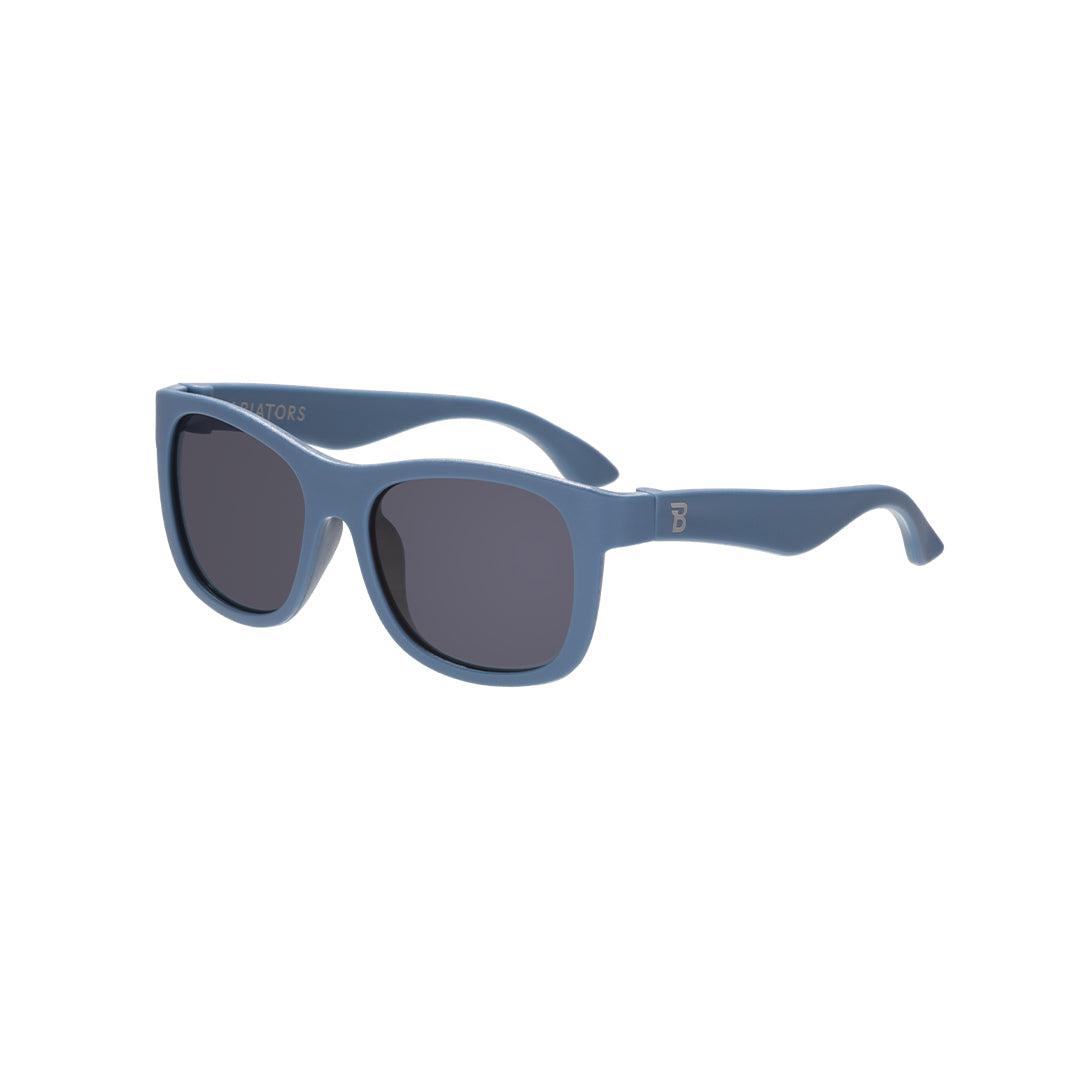
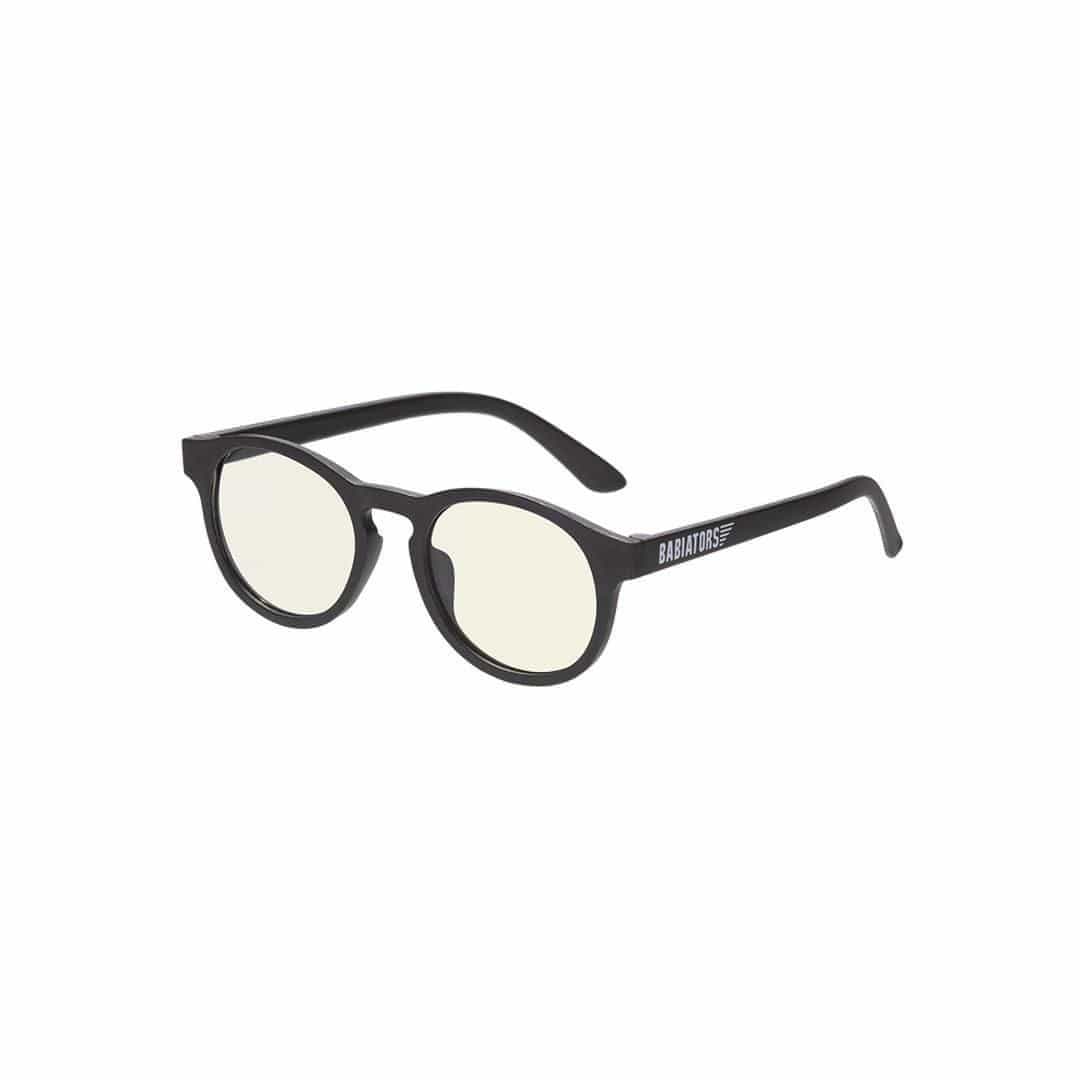
There is a trade-off to consider. Ultra-light frames can feel wonderful for young children, while sturdier frames may cope better with rough-and-tumble days. The sweet spot is a lightweight pair with enough flexibility to survive normal kid behaviour. Babiators are made with this reality in mind, pairing 100% UV protection with virtually indestructible frames and an Awesome Guarantee that replaces broken sunglasses free for one year.
How to build a no-fuss sunglasses habit
Start before you need them. Let your child wear their sunglasses for a few minutes in the garden, on a walk or while pretending to pack for a holiday. Praise the behaviour rather than making a big deal of the glasses: “You remembered your sunny-day eyes!” works better than a long explanation when a toddler is determined to negotiate.
Keep sunglasses somewhere predictable, such as beside their shoes, in the changing bag or in the car. A protective case is useful for travel, but it should not be so complicated that you stop using it. If your child removes their sunglasses often, check the fit first. They may be telling you that the frames are uncomfortable, rather than simply being difficult.
Parents and grandparents can help by wearing their own sunglasses too. Children copy what they see. When sunglasses are part of the family’s outdoor routine, they become as ordinary as putting on a coat when the weather changes.
When sunglasses need extra attention
If your child has a diagnosed eye condition, has recently had eye treatment, or seems unusually sensitive to light, speak to an optometrist or healthcare professional. They can advise on the right protection and whether a particular lens tint is appropriate. Sunglasses are excellent everyday protection, but they are not a substitute for professional eye care.
Also check sunglasses regularly. Replace lenses that are deeply scratched, frames that no longer sit securely, or any pair that has lost its UV-protection label and cannot be verified. A favourite pair may look well loved, but clear vision and dependable UV filtering are worth more than sentiment.
The small moments are where healthy habits take hold: slipping sunglasses on before the playground, choosing a pair for the beach bag, or letting your little one pick their favourite frame before a sunny walk. Give them protection that can keep up, and they can get on with the serious business of being a kid.
 Volver a Blog

